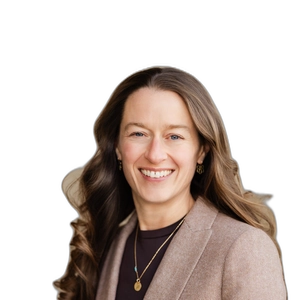
Republican
On the Issues
↑ TopThe answers below were solicited from candidates via a written questionnaire created by WyoFile reporters and editors in June 2026. Responses are presented exactly as submitted, without fact-checking, wordsmithing or editing for grammar, punctuation or spelling errors.
Legislative candidates were invited to respond to the questionnaire several times by email and by phone. Out of fairness to the candidates who met the deadline, WyoFile will not add responses after the guide's publication.
Where do you live currently? How long have you lived there? How long have you lived in Wyoming? Where were you born?
I was born in Casper. As a child, my father’s work in the oil and gas industry took the family from Bar Nunn to Evanston and eventually to Riverton, where both my parents were raised. I went to school in Laramie, and have lived in Cheyenne since then.
What age will you be on Election Day, Nov. 3, 2026?
42
Please tell the voters about yourself including your background and qualifications.
After earning my accounting degree from UW, I worked in public accounting in Cheyenne and became licensed as a Certified Public Accountant (CPA). Performing in-depth audits of small businesses, nonprofits, and governments gave me a critical understanding of accounting principles, financial statements, internal controls, and federal funds management. Later on, I began my public service career with Wyoming’s judicial branch, and ultimately served as the Chief Fiscal Officer and Director of Human Resources. In that role, I prepared and managed a statewide budget of $80 million and oversaw the human resources affairs of over 300 employees. Personally, my husband, two teenagers, and I enjoy hunting, running, hiking, and shooting sports, and I've had the fortune of drawing and harvesting a bison, mountain goat, and moose.
How will you assess Wyoming's current accounting systems? And what needs to be done to put Wyoming in the best position to succeed now and in the future?
The State Auditor, by law, must oversee the state's electronic accounting system. This is a highly sophisticated system that is responsible for capturing and reporting on every dollar that flows in and out of state coffers. As state revenues and outflows shift and change, and as fraudsters continually become more sophisticated, the system must keep up. The current system is modern, cloud-based (meaning it doesn't rely on outdated physical hardware), and has extensive protections and control features to make sure state assets are protected and accurately recorded. However, this work is never done - we have a environment of continuous improvement, and are always assessing the needs of users and constituents to make sure needs are met. Through this system, we also produce the State's financial statements, for which have received the Certificate of Achievement for Excellence in Financial Reporting from the Government Finance Officers Association every year I've been in office.
We asked WyoFile readers to rank issues that are important to them, and government transparency and ethics was near the top of the list. What can the auditor do to engender public trust when it comes to the state's finances?
As the official custodian of the accounting record of the State of Wyoming, the State Auditor plays a big part in both actual transparency, as well as leading by example and fostering an environment in which transparency is the norm, not the exception. When I took office, I inherited a public records lawsuit from my predecessor, and within 30 days produced and turned over six years’ worth of State spending data. The lawsuit was quickly dismissed, saving taxpayers thousands in legal fees. Six months later, my office debuted WyOpen.gov - Wyoming’s online checkbook. This groundbreaking website provides expenditure data for the state on a daily basis and has over 10,000 pageviews per month. Last year, I worked with the legislature to enshrine WyOpen.gov into law, ensuring this high level of transparency cannot be undone. We always go above and beyond with public records requests, and I am currently working with stakeholders to further strengthen and improve Wyoming's public records laws.
The auditor serves on the State Loan and Investment Board. How should the board coordinate with local communities when it comes to deciding state-sanctioned uses on state trust lands?
As a member of the Board of Land Commissioners, I have a constitutional duty to utilize state lands to earn revenue for the K-12 school system. Our public lands are also one of the things we treasure most about Wyoming life - and as a frequent user of both state and federal public lands, I get it. It isn't something we are willing to give up - but letting these lands sit dormant from a revenue perspective also doesn't work. Balancing multiple use is critical, but it's tricky - and the Board doesn't always get it right. It's incredibly important for local communities to be proactive about uses of state lands in and around their community. We have several great examples where local entities have worked with the Board to bring their own proposals that fit best in their communities. The Pilot Hill Recreation Area in Laramie and the Munger Mountain parcel in Teton County are two that come to mind.
The auditor serves on boards that grapple with economic development projects. We've seen tensions between large-scale projects like wind and data centers and local private property owners. How, as auditor, would you balance those competing interests?
The conversation around these large-scale projects is one Wyoming has to have... now. While this issue has always been around, it has come to the forefront due to the sheer number of projects that are happening around our state. I'm not willing to be a blanket "No" or "Yes" on any one type of project - firstly, this isn't a durable solution, and secondly, these projects will happen with or without state land - so simply saying "No" on state land isn't a productive or helpful way forward. Each project comes with risks and opportunities and must be evaluated on its merits, but we must also consider the cumulative impact they have on our communities and resources. Most Wyomingites, including myself, are fierce defenders of private property rights - but the line where one person's private property rights start detrimentally impacting another isn't always clear. I don't have a silver bullet answer for this issue - I think it will be the #1 issue facing this board in the next term.
Campaign Finance
As of Aug 17, 2026, per state filings.
Shown relative to the top fundraiser in this race — Kristi Racines raised more than any other candidate.
Top Contributors*
- SAMUELSON, DOUG (CHEYENNE)$2,500
- SAMUELSON, SUSAN (CHEYENNE)$2,500
- SCARLETT, DICK (JACKSON)$2,500
- HEYNEMAN JR, JOHN (SHERIDAN)$1,500
- MOTOROLA SOLUTIONS, INC. PAC (WASHINGTON )$1,500
* Contributions are grouped by donor name and reported ZIP code — two donors who share both could be counted as one, and the same donor could be split into separate entries if they were reported giving from two different addresses. Errors in how a candidate or committee reported a contribution may also make these totals inaccurate.
Full records, individual transactions, and filings for all Wyoming candidates are available from the Wyoming Campaign Finance Information System.
WyoFile Coverage of RACINES
About this Project
↑ TopWyoFile produced this guide with coding and web development by Thomas Musselman, editing by Tennessee Watson and production assistance by Calla Shosh. Contact Tennessee Watson with questions, corrections or suggestions at tennessee@wyofile.com.
WyoFile is a Wyoming 501(c)3 nonprofit, independent, member-supported, public-interest news service reporting on the people, places and policy of Wyoming. WyoFile's donor base is politically diverse, including some donors who are candidates in this year's election. We maintain separation between sources of revenue and editorial direction, decisions and oversight. Acceptance of financial support does not constitute implied or actual endorsement of donors or their products, services or opinions, and does not confer editorial influence, nor does donor support imply any endorsement of WyoFile's reporting, commentary or editorial position.
This material is available for republication by select media outlets. Contact Collaborations Editor Rebecca Huntington at rebecca@wyofile.com to learn how.
Enjoying WyoFile’s election coverage?
Support this work ❤️