Republican

Democrat
On the Issues
↑ TopThe answers below were solicited from candidates via a written questionnaire created by WyoFile reporters and editors in June 2026. Responses are presented exactly as submitted, without fact-checking, wordsmithing or editing for grammar, punctuation or spelling errors.
Legislative candidates were invited to respond to the questionnaire several times by email and by phone. Out of fairness to the candidates who met the deadline, WyoFile will not add responses after the guide's publication.
Where do you live currently? How long have you lived there? How long have you lived in Wyoming? Where were you born?
I live in Jackson and have been here since 2008. Previously, I lived in Saratoga and Cheyenne, and have lived in Wyoming most of my adult life and spent summers in Saratoga as a child. I was born in Cleveland, OH.
What age will you be on Election Day, Nov. 3, 2026?
68 years old
Please tell the voters about yourself including your background and qualifications.
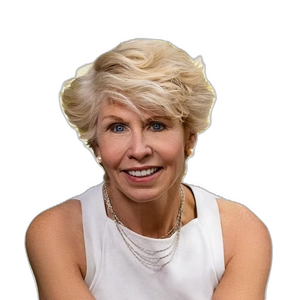
I am the Democratic state representative for Wyoming House District 23 and the President and CEO of the George B. Storer Foundation. I was first elected in 2022 to represent Teton County, where I focus on practical, bipartisan solutions that reflect Teton County values and strengthen communities across our state.
I lead my family’s foundation, which supports early childhood education, climate and conservation work, and Wyoming communities, and I’ve helped modernize its governance, investment policy, and strategic direction since 2008. A lifelong angler and conservationist, I was the first woman to serve on the U.S. Fly Fishing Team and was honored with the Theodore Roosevelt Conservation Partnership’s Conservation Leadership Award in 2019.
I hold BA and MFA degrees from the University of Southern California’s School of Cinema, and I bring that storytelling and strategic perspective to my legislative and philanthropic work.
What are the biggest challenges and opportunities facing Wyoming today? As a legislator, how would you address them?
Wyoming’s biggest challenges are economic dependence on boom‑and‑bust fossil fuel revenues, workforce and housing pressures, and protecting land, water, and communities amid rapid change. Our opportunities lie in diversifying the economy, investing in people and infrastructure, and leveraging world‑class natural assets and communities like Teton County as innovation hubs.
As a legislator, I would:
Pass a long‑term fiscal plan that diversifies revenue and supports local governments.
Invest in education, job training, childcare, broadband and cell service so Wyomingites can thrive in new industries.
Tackle housing and land‑use policy so workers and families can afford to live where they work.
Protect public schools, clean water, and public lands as pillars of our economy and quality of life.
Model civil, solutions‑focused leadership rooted in Wyoming values.
.
We asked WyoFile readers to rank issues that are important to them, and healthcare costs and access topped the list. What can the Legislature do to make healthcare more affordable and accessible to Wyomingites?
As a legislator, I would do the following:
Expand Medicaid with a Wyoming‑specific plan to cover thousands of low‑income adults, cut uncompensated care and stabilize premiums and rural hospitals.
Use the new federal Rural Health Transformation dollars to keep local hospitals, EMS and clinics open and invest in telehealth, behavioral health and primary care.
Raise targeted Medicaid reimbursement rates (maternity care, EMS, rural providers) so more doctors and hospitals can afford to serve Wyoming patients.
Spur competition and innovation in the insurance market, including exploring a high‑risk/catastrophic pool and stronger rate review to push down premiums.
Grow a homegrown healthcare workforce through loan‑repayment, training partnerships and incentives for providers to practice in rural and frontier communities.
Do you support efforts to sell or transfer public land in Wyoming? How do you plan to ensure that state and federal land is managed in the best interest of the people of Wyoming?
I do not support large‑scale sale or transfer of Wyoming’s public lands to private interests or away from public ownership. Our lands are the backbone of our economy, outdoor heritage and communities, and once they’re sold, we don’t get them back.
As a legislator, I would:
Oppose public‑land sell‑offs and support keeping lands public, open and accessible.
Ensure state trust lands are managed to grow long‑term value for school and other beneficiaries while balancing conservation and community needs on the ground.
Back “multiple use, local voice” management that balances grazing, hunting, recreation, conservation and responsible energy with real input from Wyoming communities.
Require agencies to plan for climate‑driven drought and wildfire and invest in forests, rangelands and watersheds to build long‑term resilience for people, wildlife and local economies.
No two Wyoming counties are the same when it comes to how they generate revenue. As a legislator, how would you approach the public's desire for property tax relief with local revenue needs?
I support targeted relief that keeps people from being taxed out of their homes without blowing a hole in county and school budgets.
As a legislator, I helped champion Constitutional Amendment A, which gives us a constitutional way to lower taxes on owner‑occupied primary homes, not second homes or commercial property. By contrast, the 4% cap is delivering the biggest breaks to wealthy second‑homeowners and creating huge disparities in how similar properties are taxed, which raises serious questions about whether our system is still fair, uniform and equal under the Wyoming Constitution.
Going forward, I’d lean on Amendment A, targeted state‑funded relief tools, and fairer state‑local revenue sharing so every county can tailor solutions that protect primary‑residence homeowners while keeping schools, EMS and local services strong.
What role, if any, should the Wyoming Legislature play in economic development?
The Legislature absolutely has a role in smart economic development that serves Wyoming people, not just the next boom. I believe we should be more aggressive and strategic in using a portion of our permanent funds for rotating, low‑interest loans through SLIB and the Business Council to build community infrastructure, workforce housing and other critical projects the private market is struggling to or can't finance on its own. Done prudently, these investments keep the funds intact, recycle dollars through Wyoming communities, help grow our workforce, keep more of our kids and grandkids here and diversify the economy. By investing in our communities and people, new industries will be more inclined to consider Wyoming as a place to grow a business.
Explain your values when it comes to campaign donations. Does Wyoming's system for monitoring campaign donations and expenditures need reform?
I believe transparency and accountability in campaign finance are essential to earning and keeping the public’s trust. I support taking donations that reflect Wyoming values, disclosing them clearly and on time, and refusing money that comes with strings attached or undermines public confidence.
Wyoming’s current disclosure system is better than it used to be but still has big gaps, especially around late, hard‑to‑track contributions and outside "dark money" spending. I think the Legislature should strengthen reporting rules so voters can easily see who is funding campaigns before they cast their ballots, improve enforcement and auditing, and bring more sunlight to dark‑money “issue” campaigns that are really about influencing elections.
Campaign Finance
As of Aug 17, 2026, per state filings.
Shown relative to the top fundraiser in the Wyoming House: Julie Jarvis, with $58,900 raised.
Top Contributors*
- SCHUSTER, ROBERT P. (JACKSON)$2,500
- UNFRIED, AMY (WILSON)$1,500
- UNFRIED, STEVEN (WILSON)$1,500
- HUNT, JAMES (JACKSON)$1,500
- LINCOLN, KATIE (PHOENIX)$1,500
* Contributions are grouped by donor name and reported ZIP code — two donors who share both could be counted as one, and the same donor could be split into separate entries if they were reported giving from two different addresses. Errors in how a candidate or committee reported a contribution may also make these totals inaccurate.
Full records, individual transactions, and filings for all Wyoming candidates are available from the Wyoming Campaign Finance Information System.
WyoFile Coverage of STORER
About this Project
↑ TopWyoFile produced this guide with coding and web development by Thomas Musselman, editing by Tennessee Watson and production assistance by Calla Shosh. Contact Tennessee Watson with questions, corrections or suggestions at tennessee@wyofile.com.
WyoFile is a Wyoming 501(c)3 nonprofit, independent, member-supported, public-interest news service reporting on the people, places and policy of Wyoming. WyoFile's donor base is politically diverse, including some donors who are candidates in this year's election. We maintain separation between sources of revenue and editorial direction, decisions and oversight. Acceptance of financial support does not constitute implied or actual endorsement of donors or their products, services or opinions, and does not confer editorial influence, nor does donor support imply any endorsement of WyoFile's reporting, commentary or editorial position.
This material is available for republication by select media outlets. Contact Collaborations Editor Rebecca Huntington at rebecca@wyofile.com to learn how.
Enjoying WyoFile’s election coverage?
Support this work ❤️