Republican
Inactive Candidates (1)ShowHide
Republican
On the Issues
↑ TopThe answers below were solicited from candidates via a written questionnaire created by WyoFile reporters and editors in June 2026. Responses are presented exactly as submitted, without fact-checking, wordsmithing or editing for grammar, punctuation or spelling errors.
Legislative candidates were invited to respond to the questionnaire several times by email and by phone. Out of fairness to the candidates who met the deadline, WyoFile will not add responses after the guide's publication.
Where do you live currently? How long have you lived there? How long have you lived in Wyoming? Where were you born?
Powell, Wyoming, 34 years, New York
What age will you be on Election Day, Nov. 3, 2026?
64
Please tell the voters about yourself including your background and qualifications.
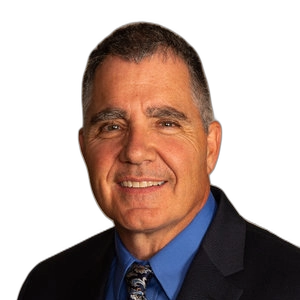
Living in Powell for 34 years, I am rooted in the community. I have spent 20 years as Powell Mayor and City Council Representative. I also served as President of the Powell Chamber of Commerce. Those roles were working positions that put me at the table for real decisions affecting real people.
Beyond city government I have represented Powell on the Wyoming Association of Municipalities board, served on the Park County Travel Council, and aided citizens from the Yellowstone County Assistance Network board. I have been part of projects ranging from building homes with Habitat for Humanity to developing the city’s high speed internet infrastructure, bringing a gluten free oats processing facility to Powell, building the community aquatic center, and championing a Shoshone River boat ramp south of town.
What connects all of that is a simple philosophy: show up, do the work, and remember that the best outcomes happen when a community works together.
What are the biggest challenges and opportunities facing Wyoming today? As a legislator, how would you address them?
Wyoming faces challenges with an economy heavily dependent on mineral revenues that fluctuate, a workforce shortages and communities working hard to remain viable as demographics shift.
The opportunity is that Wyoming still has choices other states have already lost. We have no income tax, manageable debt, and industries — energy, agriculture, and tourism — that the rest of the nation depends on.
As a legislator I would focus on three priorities: local control — the people closest to a problem are best equipped to solve it, protecting Wyoming's public lands for the hunters, ranchers, recreationalists and energy producers who depend on them every day; and ensuring that the revenues generated in communities like Park County find their way back to those communities in the form of roads, water infrastructure, and services that make them places worth staying.
Wyoming's future is bright if we make smart decisions now. I intend to be part of making those decisions well.
We asked WyoFile readers to rank issues that are important to them, and healthcare costs and access topped the list. What can the Legislature do to make healthcare more affordable and accessible to Wyomingites?
When the nearest specialist is hours away and premiums consume a growing share of a family's income, that is a real problem with real consequences for working people.
The Legislature should focus on policies that increase competition and transparency in healthcare pricing, reduce administrative burdens on rural providers and critical access hospitals that are already operating on thin margins, and explore workforce incentives that attract and retain medical professionals in underserved rural areas.
I am also open to honest conversations about what other states have done to address rural access issues, evaluated on their actual outcomes rather than their political labels.
What I am not interested in is top-down mandates that add cost and bureaucracy without improving care. The goal is more providers, more options, and more affordability — and getting there requires listening to the healthcare professionals and patients in our own communities first.
Do you support efforts to sell or transfer public land in Wyoming? How do you plan to ensure that state and federal land is managed in the best interest of the people of Wyoming?
I do not support the broad sale or transfer of Wyoming's public lands, and I say that as someone who has spent years championing outdoor recreation and public land access in Park County.
Public lands are part of Wyoming's identity and its economy. They support hunting, fishing, grazing, energy development, and tourism. Transferring those lands to private ownership or to underfunded state management would put access at risk.
I have real concerns about federal land management decisions that are made far from Wyoming by people who have never set foot here. The interest of Wyoming's people is not always reflected in federal agency priorities, and the Legislature should be an aggressive advocate for local input into how these lands are managed — grazing allotments, access roads, energy permitting, and wildfire management included.
The goal should be keeping public lands public while insisting that Wyoming's voice is heard loud and clear.
No two Wyoming counties are the same when it comes to how they generate revenue. As a legislator, how would you approach the public's desire for property tax relief with local revenue needs?
Property tax relief is a concern for many Wyoming families, particularly long-term residents on fixed incomes.
Local services — roads, emergency response, schools — depend on a revenue base that cannot be legislated away from Cheyenne without consequences. A one-size-fits-all property tax solution risks solving one county's problem while creating another's.
My approach would be to pursue targeted relief — protecting primary homeowners and long-term residents from runaway assessments — while preserving local governments' ability to fund the services their communities need. Programs that cap tax burden as a percentage of income, exemptions for primary residences, and phase-in protections for significant assessment increases are all tools worth examining.
I would resist legislative mandates that strip local communities of the revenue flexibility they need to govern themselves responsibly. Local control must mean something, and property tax policy is where that principle gets tested.
What role, if any, should the Wyoming Legislature play in economic development?
The Legislature's most valuable contribution is creating the conditions where private enterprise can take root and grow. That means keeping taxes low and predictable, maintaining a regulatory environment that doesn't punish investment, and building the infrastructure — roads, water systems, workforce pipelines through our community colleges — that allows businesses to succeed once they arrive.
The Legislature doesn't create jobs — but it absolutely creates the environment where job creators choose Wyoming over every other option on their list.
Explain your values when it comes to campaign donations. Does Wyoming's system for monitoring campaign donations and expenditures need reform?
I believe in full transparency. Voters deserve to know who is funding campaigns and in what amounts. Wyoming's current reporting system is functional, but I am open to reforms that improve timeliness and accessibility of disclosure data. What I am not interested in is a system that creates barriers for ordinary citizens and small donors while doing nothing to address the larger influence questions. Dark money is influencing Wyoming elections therefore, some regulation should be considered. Transparency and accessibility should go together.
Campaign Finance
As of Aug 17, 2026, per state filings.
Shown relative to the top fundraiser in the Wyoming House: Julie Jarvis, with $58,900 raised.
Top Contributors*
- WY EDUCATION ASSN. PAC FOR EDUCATION (CHEYENNE)$2,025
- WY REALTORS PAC (CASPER)$2,000
- BLAIR, FREDERICK Q (CODY)$1,500
- NICKLES, STEVE (POWELL)$1,500
- CONPAC CONTRACTORS PAC (CHEYENNE)$1,000
* Contributions are grouped by donor name and reported ZIP code — two donors who share both could be counted as one, and the same donor could be split into separate entries if they were reported giving from two different addresses. Errors in how a candidate or committee reported a contribution may also make these totals inaccurate.
Full records, individual transactions, and filings for all Wyoming candidates are available from the Wyoming Campaign Finance Information System.
WyoFile Coverage of WETZEL
About this Project
↑ TopWyoFile produced this guide with coding and web development by Thomas Musselman, editing by Tennessee Watson and production assistance by Calla Shosh. Contact Tennessee Watson with questions, corrections or suggestions at tennessee@wyofile.com.
WyoFile is a Wyoming 501(c)3 nonprofit, independent, member-supported, public-interest news service reporting on the people, places and policy of Wyoming. WyoFile's donor base is politically diverse, including some donors who are candidates in this year's election. We maintain separation between sources of revenue and editorial direction, decisions and oversight. Acceptance of financial support does not constitute implied or actual endorsement of donors or their products, services or opinions, and does not confer editorial influence, nor does donor support imply any endorsement of WyoFile's reporting, commentary or editorial position.
This material is available for republication by select media outlets. Contact Collaborations Editor Rebecca Huntington at rebecca@wyofile.com to learn how.
Enjoying WyoFile’s election coverage?
Support this work ❤️