
Republican
Democrat

Constitution
Inactive Candidates (3)ShowHide

On the Issues
↑ TopThe answers below were solicited from candidates via a written questionnaire created by WyoFile reporters and editors in June 2026. Responses are presented exactly as submitted, without fact-checking, wordsmithing or editing for grammar, punctuation or spelling errors.
Legislative candidates were invited to respond to the questionnaire several times by email and by phone. Out of fairness to the candidates who met the deadline, WyoFile will not add responses after the guide's publication.
Where do you live currently? How long have you lived there? How long have you lived in Wyoming? Where were you born?
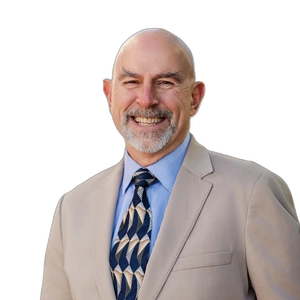
Though born in New Mexico, I was raised on a Carbon County ranch and currently live in Cheyenne. Growing up on the ranch, I learned early the values of hard work, personal responsibility, and community service. Wyoming’s traditions shaped who I am, and I am proud to call our state home. I hold a bachelor’s, MPA, and law degree from the University of Wyoming.
What age will you be on Election Day, Nov. 3, 2026?
40
Please tell the voters about yourself including your background and qualifications.
For over a decade, I have served Wyoming in vital public roles. As former State Elections Director, I partnered with county clerks to administer secure, reliable elections. My service includes the Department of Corrections, acting as Military/Veterans Liaison for our congressional delegation, and serving as a U.S. Navy Reserve officer.
As a local business owner, I know the need for efficient government and taxpayer stewardship. I’m running for SOS to deliver a professional, transparent office. I will strengthen election security, improve overseas military voting, support vet-owned businesses, and modernize services with absolute accountability.
Lawmakers have spent a lot of time in recent years considering and enacting changes to the state’s election system. As the state’s chief elections officer, what additional changes, if any, would you support?
Wyoming elections are among the best in the nation, but we must always work to make them better. As Secretary of State, my focus will be on practical, data-driven security enhancements rather than political theater.
I support targeted changes that make our elections easy to vote legally but hard to cheat. Specifically, I support legislative efforts to implement limited hand-count audits and robust post-election verification processes to double-check our results. Additionally, I support strengthening voter roll maintenance and registration verification by improving information-sharing and giving the state the necessary investigative authority to protect the integrity of our voter lists. Finally, drawing on my military background, I will advocate for modernizing and streamlining the voting process for our overseas military members so their voices are securely heard back home. Confidence comes from transparency and professional accountability.
What do you believe is the appropriate role, if any, for the federal government to play in the administration or oversight of Wyoming’s elections? How willing would you be to work with the federal government in the expansion of that role?
The United States Constitution leaves the administration of elections explicitly to the states. I firmly oppose any federal overreach or attempts to implement federally controlled elections. Wyoming knows how to run Wyoming elections best, and that authority belongs strictly with our state and our local county clerks.
However, rejecting federal overreach does not mean we operate in a vacuum. The appropriate role for the federal government is that of a supporting partner, not a manager. We must maintain professional, collaborative relationships with federal agencies solely for resource sharing—such as receiving critical cybersecurity threat intelligence to protect our digital infrastructure, and ensuring the secure, efficient handling of overseas military ballots. I will fiercely protect Wyoming’s election sovereignty while ensuring we remain a cooperative partner on shared security and defense priorities.
The secretary of state’s office works closely with Wyoming’s county clerks to oversee election administration. That relationship has been strained in recent years. How would you approach working with the county clerks?
Having served as Wyoming’s State Elections Director, I know firsthand that secure, successful elections depend entirely on a strong partnership between the state and our 23 county clerks. The current strain in this relationship serves no one. My approach is simple: restore mutual respect and clear, top-tier communication.
I will work alongside the clerks as a partner, not a boss. By respecting their local expertise, ensuring the state provides uniform, timely guidance, and maintaining an open-door policy, we can lower the political temperature. Together, we will protect election integrity while modernizing services to support our all our voters and local communities.
What are the benefits and harms associated with Wyoming's minimal regulation of businesses registered in the state? What reforms would you recommend?
Wyoming’s business-friendly environment is a cornerstone of our economy, attracting entrepreneurs nationwide and generating vital state revenue. The benefit of our low-regulation framework is that it encourages innovation, cuts red tape, and makes it simple to launch a business. However, the lack of oversight can attract bad actors who exploit our systems to register fraudulent or bad-faith LLCs, which threatens Wyoming’s strong reputation.
To address this, we do not need more burdensome regulations that hurt honest business owners. Instead, we need smarter administration. I recommend modernizing the Secretary of State’s internal business filing systems. By automating routine administrative processes, we can free up valuable staff time. This allows our team to transition from data entry to properly investigating allegations of fraudulent businesses and shell companies. We can protect our pro-business climate while upholding accountability and the rule of law.
How would you rate Wyoming’s existing system for monitoring campaign donations and expenditures? What, if any, changes would you pursue?
Wyoming’s campaign finance system currently operates a bit like a paper tiger. While we have strict disclosure rules on the books, our enforcement and oversight capabilities are lacking. Under the Constitution, it is strictly the role of the Legislature to determine campaign finance laws and enact statutory changes. As Secretary of State, I want to work collaboratively with lawmakers, bringing my firsthand administrative experience to the table to help find ways to improve the system.
My primary focus inside the office will be operational results. I intend to bring on dedicated staff specifically trained to investigate allegations of election and campaign finance violations. We cannot protect the integrity of our political system if we only push paper. By pairing legislative improvements with a professional, investigative team at the state level, we will turn a paper tiger into a real mechanism for accountability.
To what extent should the State Loan and Investment Board coordinate with local governments when it comes to state-sanctioned uses of state trust lands?
As a member of the State Loan and Investment Board, my primary constitutional duty is to manage state trust lands to generate optimal, sustainable revenue for our public schools. However, maximizing revenue must not happen at the expense of our local communities.
SLIB should coordinate closely and proactively with local governments when considering state-sanctioned land uses. Coming from a rural ranching background, I know that state land decisions can heavily impact county infrastructure, local emergency services, and adjacent private property owners. Coordination should not give local governments a formal veto over state land mandates, but it must guarantee them a meaningful seat at the table early in the planning process. By fostering a professional partnership between the state and local leaders, we can maximize funding for our schools while respecting local zoning, protecting infrastructure, and preserving Wyoming's communities.
Campaign Finance
As of Aug 17, 2026, per state filings.
Shown relative to the top fundraiser in this race: Robert Short, with $429,521 raised.
Top Contributors*
- YOUNG MD, CHARLES (RAWLINS)$32,000
- YOUNG, CHARLES CHESTER (RAWLINS)$3,000
- KERR, DAVID (CHEYENNE)$2,500
- PETERSEN, DEAN (CHEYENNE)$1,200
- ABELS, DUANE (RAWLINS)$1,000
* Contributions are grouped by donor name and reported ZIP code — two donors who share both could be counted as one, and the same donor could be split into separate entries if they were reported giving from two different addresses. Errors in how a candidate or committee reported a contribution may also make these totals inaccurate.
Full records, individual transactions, and filings for all Wyoming candidates are available from the Wyoming Campaign Finance Information System.
WyoFile Coverage of YOUNG
About this Project
↑ TopWyoFile produced this guide with coding and web development by Thomas Musselman, editing by Tennessee Watson and production assistance by Calla Shosh. Contact Tennessee Watson with questions, corrections or suggestions at tennessee@wyofile.com.
WyoFile is a Wyoming 501(c)3 nonprofit, independent, member-supported, public-interest news service reporting on the people, places and policy of Wyoming. WyoFile's donor base is politically diverse, including some donors who are candidates in this year's election. We maintain separation between sources of revenue and editorial direction, decisions and oversight. Acceptance of financial support does not constitute implied or actual endorsement of donors or their products, services or opinions, and does not confer editorial influence, nor does donor support imply any endorsement of WyoFile's reporting, commentary or editorial position.
This material is available for republication by select media outlets. Contact Collaborations Editor Rebecca Huntington at rebecca@wyofile.com to learn how.
Enjoying WyoFile’s election coverage?
Support this work ❤️