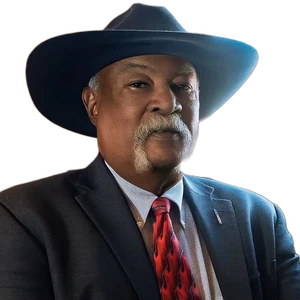
Republican
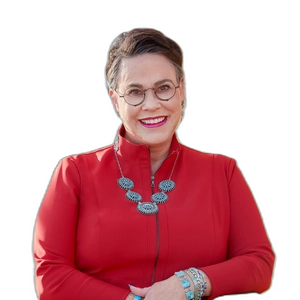
Democrat
Inactive Candidates (5)ShowHide
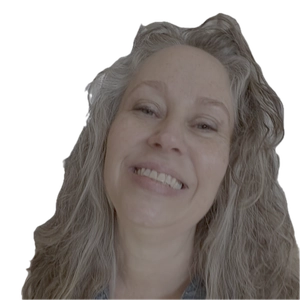

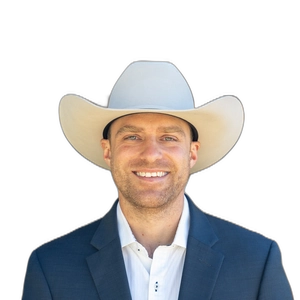

Democrat

On the Issues
↑ TopThe answers below were solicited from candidates via a written questionnaire created by WyoFile reporters and editors in June 2026. Responses are presented exactly as submitted, without fact-checking, wordsmithing or editing for grammar, punctuation or spelling errors.
Legislative candidates were invited to respond to the questionnaire several times by email and by phone. Out of fairness to the candidates who met the deadline, WyoFile will not add responses after the guide's publication.
Where do you live currently? How long have you lived there? How long have you lived in Wyoming? Where were you born?
Cheyenne Wyoming , most of 72 years
What age will you be on Election Day, Nov. 3, 2026?
72
Please tell the voters about yourself including your background and qualifications.
James W. Byrd is a fifth-generation Wyomingite and Democratic candidate for the U.S. Senate. He brings a decade of direct legislative service and extensive private-sector experience to his campaign. Byrd served ten years in the Wyoming House of Representatives (2009–2019) representing Cheyenne's District 44. Recognized for his leadership, his legislative peers elected him Minority Whip (2013–2015) and Minority Caucus Leader (2015–2017). Building on his statehouse tenure, he ran as the Democratic nominee for Wyoming Secretary of State in 2018. Before entering public office, Byrd built a diverse professional career spanning the energy and technology sectors. He initially worked in Colorado as an exploration geophysicist for major energy companies, including Amoco/BP. He later transitioned into IT, working as a contract computer project manager and software consultant for global corporations like American Express and Cargill.
What are the biggest challenges and opportunities facing Wyoming today? What would you do as a federal lawmaker to address them?
Wyoming faces a critical turning point: balancing its legacy as an energy powerhouse with the urgent need for economic diversification, all while protecting its natural heritage and rural communities. Volatile fossil fuel markets threaten state revenues, while next-generation energy innovations—like advanced nuclear and minerals—and a booming outdoor recreation economy offer massive opportunities. As a federal lawmaker, I would champion federal permitting reform and scale up initiatives modeled after the state's newly established Wyoming Energy Dominance Fund to incentivize cutting-edge technology, such as the TerraPower Natrium nuclear project. This protects traditional energy workers while drawing tech sectors like data centers to the state. Second, because over 90% of Wyomingites rely on public lands for their livelihood or recreation, I would fight to keep federal lands public and under multi-use management with heavy local input.
We asked WyoFile readers to rank issues that are important to them, and healthcare costs and access topped the list. What can Congress do to make healthcare more affordable and accessible to Wyomingites?
To make healthcare more affordable and accessible for Wyomingites, Congress must take direct action centered on lowering costs and reinforcing rural infrastructure. First, federal lawmakers should protect and stabilize our rural healthcare system by safeguarding support programs and critical access designations. Ensuring small, rural facilities have flexible federal funding prevents closures that create healthcare deserts on Main Street. Second, Congress can lower out-of-pocket expenses by pushing for transparent medical pricing, capping soaring prescription drug costs, and protecting consumer-friendly provisions in federal health insurance markets to relieve the strain on family budgets. Third, we must expand local care options by increasing federal investments in broadband infrastructure and making telehealth reimbursements permanent, allowing rural residents to access specialists without driving hundreds of miles.
How willing are you to compromise with legislators and other officials with different perspectives?
Compromise isn't about abandoning your core principles; it is about finding the common ground necessary to deliver real results for the people you represent. During my ten years in the Wyoming House of Representatives, I served in the minority party, which meant absolutely nothing could get accomplished without open communication, mutual respect, and a willingness to work across the aisle. I learned firsthand that when you sit down and focus on practical kitchen-table issues—like safeguarding our public lands, protecting energy workers, and lowering the cost of rural healthcare. Wyomingites care about results, not Beltway bickering. My political legacy is rooted in a family tradition of public service where solving problems for the community always came before partisan ideology. In Washington, I will gladly work with any lawmaker, regardless of their party, who is committed to putting Wyoming values first and making life more affordable for our families.
The Wind River Indian Reservation is home to the Eastern Shoshone and Northern Arapaho tribes. How will you represent tribal interests in Washington?
To effectively represent the Eastern Shoshone and Northern Arapaho tribes, I will prioritize honoring tribal sovereignty, improving federal healthcare funding, and ensuring local voices drive regional policy. First, I will fight for stable, full funding for the Indian Health Service (IHS) to address critical healthcare shortages and lower costs on the reservation. Second, I will work across the aisle to secure robust federal investments in infrastructure, focusing on high-speed broadband, safe roads, and reliable clean water systems. Finally, I will ensure tribal leaders have a permanent seat at the table when making federal land and resource management decisions that affect their ancestral lands. True representation means listening first. I will maintain an open, continuous dialogue with both tribal business councils to ensure their unique economic, educational, and cultural priorities are championed directly in Washington.
The Senate is tasked with confirming the president’s nominees. How would you balance the president's right to select the team of his or her choosing, with the Senate's responsibility to evaluate fitness for public service?
The Constitution gives the president the authority to nominate a team, but it explicitly charges the Senate with "Advice and Consent." I view this responsibility not as an opportunity for partisan obstruction, but as a crucial constitutional check to ensure nominees possess the core competency, integrity, and respect for the law required to lead. My evaluation would focus on fitness for public service over political ideology. A president is entitled to a cabinet that shares their policy goals, provided those nominees are qualified and committed to upholding the Constitution. However, the Senate must never act as a rubber stamp. I would thoroughly vet nominees to ensure they lack conflicts of interest, demonstrate a deep understanding of their agency’s mission, and respect the co-equal status of Congress. If a nominee meets those standards of character and competence, they deserve confirmation—regardless of which party occupies the White House.
Nearly half of the land in Wyoming is managed by the federal government. As a member of Congress, how do you plan to ensure that land is managed in the best interest of the people of Wyoming?
Nearly half of Wyoming is managed by the federal government. To ensure these lands serve our people, my approach centers on keeping public lands public. I strongly oppose selling or privatizing them, as a mass sell-off would devastate our tourism, outdoor heritage, and agricultural industries. The federal government must act as a good neighbor and protect our multi-use partnerships. For generations, Wyoming ranchers have relied on federal grazing leases to keep family operations afloat. Privatization would erase those long-standing agreements and threaten the survival of the family ranch. True multi-use management requires that local voices—including stock growers, conservationists, energy workers, and tribal communities—drive policy. I will reject short-sighted federal plans that exploit our open spaces to cover national debts, and ensure land management decisions are made with input from the Wyomingites who live on and work the land.
How would you rate the Trump administration’s approach to immigration since the start of 2025? How can Congress improve immigration policy for the benefit of Wyoming citizens?
Our immigration system is broken. While we must secure our borders and enforce the rule of law, policies that separate families and ignore human dignity violate our nation's core principles. Congress must reclaim its authority to fix this crisis through comprehensive legislative reform rather than relying on fluctuating executive orders. To benefit Wyoming, Congress should focus on two main goals. First, we must modernize the legal visa system to provide clear, predictable pathways for vital industries like agriculture, ranching, and hospitality that rely heavily on legal seasonal labor. Second, we must fully fund and streamline our immigration courts to clear the years-long backlog and ensure fast, fair, and humane processing. By establishing a practical, lawful framework that balances strict border security with humanitarian values, Congress can protect Wyoming's economy, stabilize our workforce, and uphold our national character.
As of Sep 30, 2026 - 10:33 PM, per FEC filings.
Shown relative to the top fundraiser in this race: Harriet Hageman, with $2,435,023 raised.
Top Contributors*
- Unitemized contributions under $200$5,589
- SCHUSTER, ROBERT$1,500
- BYRD, JAMES W$1,000
- ADACHI, FUJI$1,000
- HANLON, THEODORE$1,000
* Contributions are grouped by donor name and reported ZIP code — two donors who share both could be counted as one, and the same donor could be split into separate entries if they were reported giving from two different addresses. Errors in how a candidate or committee reported a contribution may also make these totals inaccurate.
Full records, individual transactions, and filings for federal candidates are available from the Federal Election Commission.
WyoFile Coverage of BYRD
About this Project
↑ TopWyoFile produced this guide with coding and web development by Thomas Musselman, editing by Tennessee Watson and production assistance by Calla Shosh. Contact Tennessee Watson with questions, corrections or suggestions at tennessee@wyofile.com.
WyoFile is a Wyoming 501(c)3 nonprofit, independent, member-supported, public-interest news service reporting on the people, places and policy of Wyoming. WyoFile's donor base is politically diverse, including some donors who are candidates in this year's election. We maintain separation between sources of revenue and editorial direction, decisions and oversight. Acceptance of financial support does not constitute implied or actual endorsement of donors or their products, services or opinions, and does not confer editorial influence, nor does donor support imply any endorsement of WyoFile's reporting, commentary or editorial position.
This material is available for republication by select media outlets. Contact Collaborations Editor Rebecca Huntington at rebecca@wyofile.com to learn how.
Enjoying WyoFile’s election coverage?
Support this work ❤️