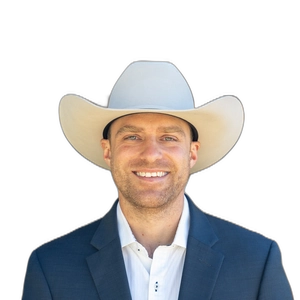
Republican
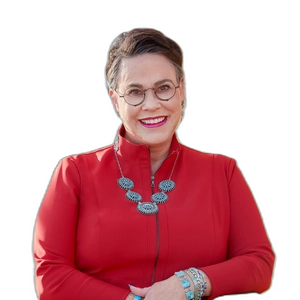
Democrat
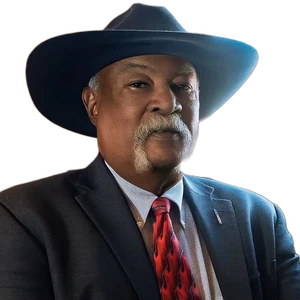
Inactive Candidates (5)ShowHide


Democrat

On the Issues
↑ TopThe answers below were solicited from candidates via a written questionnaire created by WyoFile reporters and editors in June 2026. Responses are presented exactly as submitted, without fact-checking, wordsmithing or editing for grammar, punctuation or spelling errors.
Legislative candidates were invited to respond to the questionnaire several times by email and by phone. Out of fairness to the candidates who met the deadline, WyoFile will not add responses after the guide's publication.
Where do you live currently? How long have you lived there? How long have you lived in Wyoming? Where were you born?
I live on my family’s ranch outside Jackson, Wyoming, where I’ve lived for 22 years aside from attending college and starting my career. I was born in Phoenix, Arizona, while my parents were there briefly starting their careers, but Wyoming has always been home. My family has ranched the same land since 1894, and six generations of my family have now lived and worked in Wyoming. The values I learned on the ranch, hard work, self-reliance, and land stewardship - continue to shape how I approach public service today.
What age will you be on Election Day, Nov. 3, 2026?
I will be 37 years old.
Please tell the voters about yourself including your background and qualifications.
I’m a fifth-generation Wyoming rancher, husband, father of two, former mayor of Kirby, and small-business owner. I helped build and operate Wyoming Whiskey, creating jobs and growing a Wyoming-made brand. Professionally, I’ve worked in both aerospace and technology, including roles with Blue Origin and Telnyx.
Whether it’s fixing equipment on the ranch, helping grow a business, serving in local government, or working on complex engineering problems, my career has always been about building things and solving problems. I’m running for Congress because Washington needs more people who understand how decisions affect real communities and who are willing to focus on results instead of political theater.
What are the biggest challenges and opportunities facing Wyoming today? What would you do as a federal lawmaker to address them?
Wyoming’s biggest challenge is that too many decisions affecting our future are being made by people in Washington who do not understand rural America, let alone Wyoming. Federal red tape often makes it harder for Wyoming communities to solve their own problems, whether that’s healthcare access, energy development, housing, or emergency services.
At the same time, Wyoming has enormous opportunities. We have abundant energy resources, a strong agricultural heritage, world-class public lands, and the ability to attract new industries and good-paying jobs.
As a member of Congress, I would focus on reducing unnecessary federal barriers, returning more decision-making authority to states and local communities, and ensuring federal agencies work with Wyoming rather than against it. Wyoming does not need Washington to run our lives.
We asked WyoFile readers to rank issues that are important to them, and healthcare costs and access topped the list. What can Congress do to make healthcare more affordable and accessible to Wyomingites?
Wyoming is a rural healthcare state. We have communities that struggle to recruit providers, nine counties without labor and delivery services, and we recently lost one of our major insurers. The current system simply is not working for many Wyoming families.
Congress should focus on increasing competition, reducing regulatory barriers, and making it easier for insurers to serve smaller markets like Wyoming. We should also allow greater flexibility for innovative healthcare delivery models, including telehealth and rural provider partnerships.
The goal should be straightforward: lower costs, more choices, and better access. Too much money is currently consumed by bureaucracy and administrative overhead instead of reaching patients and providers. Washington needs to stop creating obstacles and start helping rural states deliver care.
How willing are you to compromise with legislators and other officials with different perspectives?
My responsibility is to represent Wyoming. That means approaching every issue with integrity, honesty, and a willingness to work with anyone who shares a genuine interest in solving problems.
Compromise should never mean abandoning your principles, but it does mean recognizing that no one gets everything they want in a functioning democracy. If working with people who disagree with me helps deliver better outcomes for Wyoming families, ranchers, energy workers, veterans, or small businesses, I will do so. The goal is results.
The Wind River Indian Reservation is home to the Eastern Shoshone and Northern Arapaho tribes. How will you represent tribal interests in Washington?
The federal government has treaty obligations to tribal nations, and those obligations must be honored. I believe in respecting tribal sovereignty and ensuring that tribal governments have a strong voice in decisions that affect their communities.
I am particularly interested in working with tribal leaders to address persistent challenges such as healthcare access, infrastructure, economic opportunity, and the crisis of Missing and Murdered Indigenous People. Too often, tribal communities are promised support but left navigating layers of federal bureaucracy.
My role in Congress would be to listen, build relationships, and make sure Wyoming’s tribes have an advocate who takes their concerns seriously and works to ensure federal commitments are fulfilled.
The Senate is tasked with confirming the president’s nominees. How would you balance the president's right to select the team of his or her choosing, with the Senate's responsibility to evaluate fitness for public service?
The president has the right to nominate individuals who will carry out his or her agenda. At the same time, the Senate has a constitutional responsibility to ensure those nominees are qualified, ethical, and capable of serving the American people.
I would evaluate nominees based on competence, character, and their ability to perform the duties of the office, and not purely on partisan considerations. The confirmation process should be serious, thorough, and focused on whether a nominee can effectively serve the country and the people of Wyoming.
Nearly half of the land in Wyoming is managed by the federal government. As a member of Congress, how do you plan to ensure that land is managed in the best interest of the people of Wyoming?
Public lands are central to Wyoming’s economy, culture, and way of life. They support hunting, fishing, recreation, tourism, grazing, and energy production. I do not support the wholesale sale of public lands.
Federal land management should be guided by the people who live closest to the land. That means listening to local communities, state agencies, ranchers, sportsmen, tribes, and businesses when management decisions are made.
I also believe federal agencies need the resources and accountability necessary to perform their responsibilities, whether that means processing permits efficiently, maintaining access, or reducing wildfire risk. The relationship between Wyoming and the federal government should be collaborative, not adversarial. We can protect public lands while ensuring they continue to support jobs and economic opportunity.
How would you rate the Trump administration’s approach to immigration since the start of 2025? How can Congress improve immigration policy for the benefit of Wyoming citizens?
The federal government has a responsibility to secure the border and enforce immigration laws, but enforcement alone is not a complete immigration policy. Congress has failed for decades to address the structural problems in our immigration system.
We need a system that combines secure borders with legal pathways for workers, efficient processing, employer accountability, and timely immigration courts. Wyoming employers in agriculture, tourism, construction, and other industries need a legal workforce, while taxpayers deserve a system that is orderly and predictable.
When it takes decades to naturalize an immigrant, there is a clear incentive to come to this country illegally. If we increase resources at the border, we can reduce processing times to a reasonable length that removes the incentive to immigrate illegally, and enforcement becomes a much easier problem. Congress should focus on fixing the underlying system rather than continually treating the symptoms.
As of Sep 30, 2026 - 10:33 PM, per FEC filings.
Shown relative to the top fundraiser in this race: Harriet Hageman, with $2,435,023 raised.
Top Contributors*
- MEAD, SAMUEL$114,093
- WINRED$49,214
- Unitemized contributions under $200$13,539
- WALTON, CHRISTY R$7,000
- RALES, STEVEN M.$7,000
* Contributions are grouped by donor name and reported ZIP code — two donors who share both could be counted as one, and the same donor could be split into separate entries if they were reported giving from two different addresses. Errors in how a candidate or committee reported a contribution may also make these totals inaccurate.
Full records, individual transactions, and filings for federal candidates are available from the Federal Election Commission.
WyoFile Coverage of MEAD
About this Project
↑ TopWyoFile produced this guide with coding and web development by Thomas Musselman, editing by Tennessee Watson and production assistance by Calla Shosh. Contact Tennessee Watson with questions, corrections or suggestions at tennessee@wyofile.com.
WyoFile is a Wyoming 501(c)3 nonprofit, independent, member-supported, public-interest news service reporting on the people, places and policy of Wyoming. WyoFile's donor base is politically diverse, including some donors who are candidates in this year's election. We maintain separation between sources of revenue and editorial direction, decisions and oversight. Acceptance of financial support does not constitute implied or actual endorsement of donors or their products, services or opinions, and does not confer editorial influence, nor does donor support imply any endorsement of WyoFile's reporting, commentary or editorial position.
This material is available for republication by select media outlets. Contact Collaborations Editor Rebecca Huntington at rebecca@wyofile.com to learn how.
Enjoying WyoFile’s election coverage?
Support this work ❤️